CW: Violence
I have to confess that I have a violent streak.
I am not proud of every punch I’ve thrown, but I’ve thrown enough that the pattern is too recognizable to deny. When provoked, I am quick — eager, even — to use violence to regain power in situations where I feel powerless. It would be easy for me to explain how violence was normalized in my life through abuse I experienced, but I feel that is a story that has been told through academia enough that I am bored with it. I have had many encounters with violence through my life, and I cannot claim innocence in all of them. There are three in particular that stick out in my memory as being either avoidable or largely unnecessary, but also provide context to a part of myself that I have hope I will one day fully understand.
The first time I physically struck someone in anger was in a preschool program. I attended a daycare between ages four and six, run out of a home a few blocks up from the apartment I lived in with my mom (and sometimes, my dad). The business was owned by a lady named Mrs. McAfee, who had two young children who attended the daycare as well – a son, Michael, who was my age, and a daughter, Mackenzie, who was two years younger. The home had a front yard covered in grass with a huge deciduous tree inside the confines of the chain link fence that kept us from exploring the great asphalt rivers between pockets of nature.
I was a happy kid, in my own way. I liked playing on the Sega console inside, though that was a highly sought-after activity, and the older kids would intimidate me and others from spending too much time doing anything but watching. I had a friend who liked Sailor Moon, and on days when we were there together, we would often dance around outside playing our own “Sailor Moon” game. On days when my friend was not at daycare, I would explore the world outside, often playing with the pill bugs and worms in the moist dirt near the Great Tree, as I had named it.
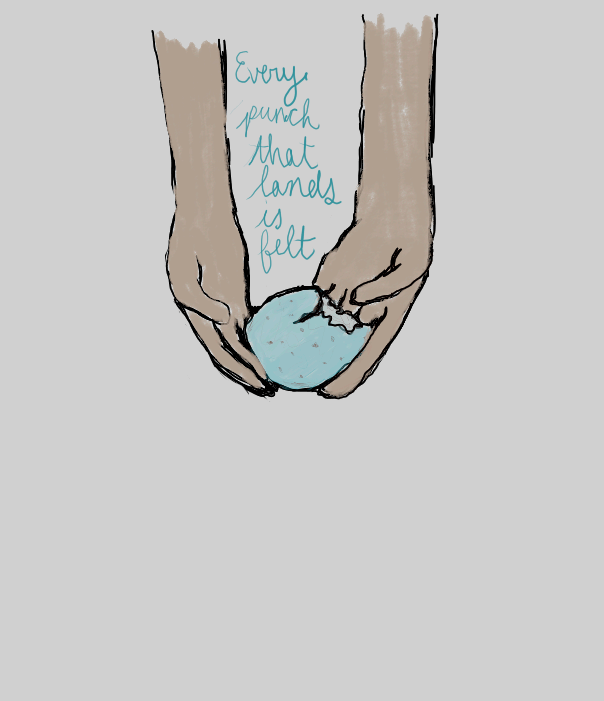
One day, I found something novel on the ground – a bright blue shell, resting among a sparse collection of leaves and branches at the base of the tree. I lowered myself to my knees, gladly accepting the price of dirty pants for the reward of new discovery. Carefully, I brushed the sample into my left hand with my right, and raised it to my face for an inspection. I had always loved nature, thanks to my maternal grandmother, and spent most of my time at home watching Discovery Channel or National Geographic on the TV. By six, I was already a junior biologist, seeking answers to the universe in everything I met, and able to confidently identify the object in my hand as a bird’s egg. The top had been cracked and removed, and the inside was empty and white. The blue was almost a supernatural hue, one that made me wonder if it had been dyed like an easter egg, but then I thought of the giant emerald egg of an emu I had seen from a Steve Irwin special, and I considered that it may be the natural color. There was a speckling of brown spots that did not brush off with a gentle touch. I decided that this was a discovery worthy of sharing, and made my way back towards the house, eagerly cupping the egg in both hands now as I approached Amy, the daycare attendant. I looked up at her with dark eyes through a mess of long bangs, chubby cheeks squinting my face as I raised my hands in offering.
“Look what I found!”
Amy gave an exaggerated gasp as she bent down, looking at the eggshell in my hands. “Wow! That’s a robin’s egg!”
I beamed with pride, taking another look at my newly identified treasure, not knowing in that moment that, in many years’ time, I would share a name with the creature that brought this beautiful thing into the world. I didn’t choose my name based on this experience, and in fact, only came to realize the connection years after the choice. In that moment, there was something about this tiny thing and the joy of discovering it—this little proof that life was beautiful. The robin’s egg became a source of identity for me, and became mine to protect.
Amy called over the other children who were within earshot, clearly hoping to use my discovery as a lesson to inspire curiosity in the others. I was overjoyed to share what I had found, and Amy asked that I keep the egg in my hands while others looked, since it was fragile and could easily be broken by one of the younger kids. The other children gathered around, taking their turn peering at the thing in my hands, with mixed responses. Some kids gazed with the same sheen of bewilderment that I had; some took a quick peek and were quickly bored, returning to their own business. Mackenzie, the daycare owner’s young daughter, approached. I lowered my hands for her a bit, knowing that since she was just 4, she might need a bit of extra help. Before I could process what was happening, Mackenzie raised her hand, palm down, and slammed it into mine, crushing the eggshell between our skin.
In my memory, as she did this, she looked into my eyes, seeing the joy in my soul die with glee, her face twisting into some hideous grin as she drank in my distress. I understand now that this is the memory of a traumatized child, and that Mackenzie was not a malicious person, and probably had no real concept of what she was doing or how it would hurt my heart. She was a little girl, and I was a slightly bigger little girl, and neither of us had any understanding of harm, fairness, or forgiveness. I understood only that a feeling had erupted within me, like I had been cut or stabbed, and that I needed her to understand how wrong it was that I was in pain. I closed my right hand, pulled it back, and punched her in the face as hard as I could.
To avoid keeping you in suspense, she was fine. We ended up desk mates during high school in a health class, and I doubt that punch altered the course of her life given that she had better grades in the class than I did. However, when she hit the ground that day, she let out a wail that stopped everything. I remember Amy pulling me away from her, and the next event in my mind is standing at home in the kitchen, barefoot on the linoleum. I remember feeling shame – my hair veiled my eyes, and I stared at the repeating yellow squares across the floor as I listened to my mother end a phone call with Amy, thanking her for the update and apologizing in a tone that was more exhausted than empathetic. When she placed the phone back on its plastic receiver on the wall, she turned to me, leaning against the counter.
“They took her to the hospital. She’s fine, but you’re suspended from daycare for two weeks.” A softness in her tone confused me – I looked up, my dark eyes meeting hers, and found her to be less angry than I had expected. She crossed her arms, and then smiled, the corner of her mouth creating a sharp angle against her gaunt cheeks. “It sounds like she deserved it.”
I was frozen, believing I was in some sort of trap – that my mother was waiting for me to agree, unrepentant, before she drove the point of my shame home. So I stayed silent and listened to her as she unveiled a lesson that molded my morality.
“There are a lot of people in this world that deserve to have their ass kicked. I think it’s an important part of life – there’s a lot of things you learn by getting your ass kicked that can’t be taught any other way. You’ll meet a lot of people who never had their ass kicked, and it shows. But,” she paused, leaning forward and brushing the hair from my eyes, her face softening again in a way that felt almost foreign to me. “You can’t throw the first punch. That gets you in trouble, even when they deserve it. You can’t start fights – but you can finish them.”
She took me out for fast food, telling me stories about fights she got in as a teen, recounting a time she was jumped by three girls, and another time where she ripped a piercing out of a girl’s belly button. As I tore into my chicken nuggets, I imagined my mother, a fierce, lean, and tan girl from southern California, dark hair and eyes, at the top of the food chain (at least, of 1980s Hermosa Beach). God, I wanted to be just like her.
—
Near the end of 2005, I turned 13 while living in Broward County, Florida. I had moved during the summer with my mother and father, who had recently decided to officially get married and try their hand at real estate. I was only at the ceremony to protest, as I knew that they were a poor match, and that the entire function of their relationship was based on the perceived notion that it would improve my life somehow. I knew from an early age that was not the case, and that the worst days of my childhood often had both of them there.
By middle school, I was decidedly misanthropic. I had been uprooted from my hometown in southern Oregon and relocated to the sand and swamp, where I struggled to breathe the salty humid air. It was an entirely different world. My hometown, nestled in the evergreen forests of the Rogue Valley, was culturally monolithic towards White Christian American Family Values. My new universe of Dania Beach, Florida had contrasts and parallels alike. Similar to back home, I was not allowed to play outside, meet friends after school, go to anyone’s house, or have friends over. Unlike back home, central Florida was alive with people – my days were full of learning about new countries, cultures, and languages. I learned that people would come from all over the world to live in the United States, whether they were running from something or running to something, and many of them founded pockets of community in Florida for several reasons.
During my year in Florida, I was surprised to have made friends. I was used to having a small group of friends back home, but it had taken me years to cultivate those relationships, and I expected to be an outsider for a long time. I learned quickly that social life worked differently in a place where almost everyone was marginal in some way. Back home, being ‘weird’ made me vulnerable. In Florida, the other was the ordinary. There, marginalization was a given – if you’re in public school in southern Florida, you’re not expected to be the envy of anyone, so being a bit strange is par for the course. In a community where no one seemed to occupy the center uncontested, there had to be other ways of dividing ourselves into social categories – race and gender did most of the sorting for us. In essence, this meant that my whiteness carried more weight in an environment where fewer people had that privilege, and being from Oregon made me somewhat exotic, as most of the kids I met had no idea that Oregon was in the United States, let alone where it was on a map. (Though I fear this problem is not limited to the Florida Public School system.)
Very quickly into the school year, I found myself in a friend group with three other girls. Daniela, a Cuban girl whose family had survived floating to the US on a powerless boat when she was an infant; Marisa, who had her own immigration story coming with her family from the Dominican Republic, and was incredibly soft spoken despite full English aptitude for reasons that felt relatable to me, and Madeline, who was one of the four white people in our class, the only other girl but me. She was quick to correct people and remind them that she was actually Italian, not white, and that her father was a police officer (actually, he was a private security guard). I can’t remember, for the life of me, what we all had in common that made us friends, but once we had sat together for lunch twice, it was clear that these were people who had accepted me, and it didn’t occur to me to look any further for friendship.
I spent most of my days keeping my eyes down, making myself smaller, and shuffling from class to class with the same group of people every day. In each major entry to the school, the doors were framed with metal detectors, and there was no freedom of movement during class time – if you needed to use the bathroom, you used it during breaks, or you didn’t go. We were not allowed to carry bags on us to class – everything went into your locker, which was subject to random inspection, and you took only what you needed to class. Compared to the relatively free-range experience of middle school in Oregon, I felt deeply institutionalized; now, in my thirties, it is no surprise to me why these kinds of environments do not succeed in keeping children safe, but then, I had to trust that the adults around me knew what was best, and acquiesce.
The two other white kids in our class were boys – one of them a quiet, nerdy type who I never really spoke to, and the other was Charlie. Charlie was, easily, a head and shoulders above the other boys, and was proportionally larger than some of the teachers. I preemptively apologize if any focus on his size reads as body shaming – I’m sure some of my memory is exaggerated by my own smallness of mind and stature at the time, but the point of narrating his body at all is less about his physical presentation, and more due to how he is socially affected by this characteristic. He is, by all accounts, “the big kid” – I had only known him the one year, but I am sure that he experienced years of feeling isolated before I ever crossed his path, and by that point, he had an impressively large chip on his shoulder.
Charlie did whatever he could to fit in to the world around him, but I don’t remember that he had any close friends. He often wore the same clothes days in a row, spoke out of turn in social settings to brag about things no one would believe, and acted aggressively when met with resistance from others. He would use vulgar, offensive language to get a rise out of people, especially the girls in the class. He was particularly fond of Daniela, and would often approach her and Marisa while they were walking the perimeter of the field at school. One day, I happened to be walking with them, listening passively as they discussed something in Spanish that I had no ability to follow, but happy to hear them speak, as though I was still privy to whatever secret only the three of us knew. I almost ran into the back of Marisa when she stopped, and as I looked up, heard Daniela mutter “puto” under her breath as Charlie approached us.
“Danielaaaaa,” he whined, opening his arms in a coercive hugging gesture.
“Fuck off!” She said, holding her ground as she stared up at him. She knew he posed no real threat to us, but he had long since been given clear notice that she did not want him in her space. His face soured down at her, and with a quick motion, he closed the distance and snatched her backpack from her shoulder. He dangled it up over her head, and to our shock, chucked it over the fence onto the sidewalk, where we could no longer see it.
Daniela flew into a rage, and Marisa stood there with her mouth hanging open. Both of them started shouting – Daniela at Charlie, who stood there with a mocking grin, and Marisa, pleading with her friend to come inside and get a teacher so they could get her bag back before it was stolen. Before they could reach a decision on what to do next, I leapt at Charlie.
There was something about the situation that nearly blinded me with rage, but I also remember it clearly, every heartbeat another still frame of the violence that had erupted from within me. In hindsight, I think I hated Charlie for reasons that had nothing to do with how he treated Daniela specifically, or with what he did that day, but that clear act of aggression had given me just enough validation that I felt I could act on the urge without much punitive repercussion – an instinct that was proved correct.
I laid into Charlie’s stomach with my shoulder, and he gave a soft ‘oof’ and stumbled backwards, clearly not expecting to encounter force, but he stared down at me as if he was still registering my intent. I hit him with a closed fist in the stomach as hard as I could, and it registered to him that I was trying to cause him harm. He stepped back at that point, holding his arms out in an attempt to keep me from hitting him, and I heard another kid from our class call out to us to break it up as he ran towards the conflict. I don’t remember how or at what moment Marisa and Daniela left – at that point, the situation was long past one where they needed to be ‘protected’ by any means, and was entirely about vindicating the hatred I held for him in my heart.
Realizing that I was not accomplishing anything, I pushed away from Charlie, and then launched myself at him again, swiping at his face with an open palm. I remember grazing him across the eyes, and at that point, any restraint he held was gone. He started swinging wildly at me, and in that moment, it dawned on me that he must have never been in an actual fight before, because he was completely unable to defend himself or make contact with me effectively. At this point, I had seen and participated in enough physical violence that fighting was natural to me – it came instinctively to go for weaker, vital points on a target, and reflexively flinch at the tensing of a person’s muscles in anticipation of a strike.
If I were a better person, at my core, perhaps that would have mattered to me. Perhaps his inadequacy, his fear, his shame, all of those palpable emotions on his face would have caused me to feel that my violence was unwarranted, unfair, even. But the only thing I felt in that moment was a rush of power. I wanted to be bigger than him. I wanted to be the one looking down on him, making him feel small and weak and too fearful to object. He was not Charlie, a big, awkward middle schooler who repeated the same corroded cultural patterns he saw in the world around him. He was a pillar, and if I could topple him, I could prove my own strength. I could have an undeniable right to claim superiority over him, morally and physically. In my current age, I can see how this is not an act of protection, but preservation. I gave life to the cultural heritage of violence that lives within every ancestor I can name.
As the other classmate approached to intervene, I leapt at Charlie, again aiming for his face. With a closed fist, I caught him square on the mouth, knocking him off balance and into the damp dirt beneath us. I heard our classmate scream as I put the weight of my knees on Charlie’s chest, laying into his face until someone lifted me off of him. The next few minutes were made up of continued verbal spats between myself and Charlie as our classmate continued to act as a referee, standing between us as the bell announcing the end of lunch deafened any insult we tried to hurl. I made my way straight to class, showing up not terribly long after the rest of my class, who were still in the post-lunch socialization stage of preparing for class. Our science teacher stood at the front of the room, a small, blonde woman who must have been younger than I am now. She called the classroom to order after a moment and, to varying degrees, we complied.
While she was writing on the whiteboard with her back to the door, it opened with a bang, and Charlie staggered in, looking uneasy on his feet, with two swollen red eyes and dirt all over the front and back of him. The teacher turned to lecture him but was halted by his appearance. “Charlie, what happened? Did you get in a fight?”
Charlie dodged her eye contact and dropped into a seat closest to the door, the murmur of laughter spreading through pockets of the room. The teacher was enraged with us – she knew Charlie tended to be a bully himself, but seemed genuinely concerned that the class had little remorse for his state. She raised her voice at us for silence, and focused her attention again on Charlie. “Charlie, please – you can tell me. Did someone attack you?”
He didn’t say anything. He didn’t need to. I looked around at other people in the class, wondering if anyone else knew what had happened, and had my answer immediately. I was met with ear-to-ear grins, snickering, head nodding, and other affirmations, and in that moment, I soaked it in. I looked to the teacher, standing before the class, and raised my hand. “Sorry,” I croaked, feeling weakness start to overtake my body as the effects of adrenaline dissipated. “We had a fight. It won’t happen again.” The teacher, aghast, stared at me like I was telling an offensive joke, and then, hearing no objection from Charlie, stood silently in front of the class, many of whom had again surrendered to fits of giggles. At that point, she made a face, shook her head, and turned back to the board to finish what she had been writing.
Throughout the rest of the year, I became Charlie’s bully. He continued many of his antics, but any time he caused a disturbance near me, I would puff up or say something to intimidate him into silence. At one point, during an English class, he was relocated to the corner by the teacher for misbehaving and continued trying to distract other people while class continued, so I threw my book at him, hitting him in the face. When he yelled, the teacher turned on him, offering him detention if he didn’t stop. I remember the look of disbelief on his face as I sneered from my chair, out of eyesight of the teacher. My behavior was reinforced by classmates, who must have found some joy in seeing him regularly cut down to size. I do not have the same bloodlust now that I did in my youth. I think often of Charlie; what his home life must have been like, what his life looked like after I was gone. I can’t imagine my absence cured all of his social issues, and I have no delusions that I had any meaningfully positive impact on his life. But does he look back on his childhood and think of this moment, with me the villain, and he the victim?
—
The last encounter to recount happened in the summer of 2013. I was getting ice cream with my dad, whose role in my life had always been sporadic and dependent on his availability. He was a felon and a painter; most of his issues in life stemmed from his drug abuse and violent temper, which was clear to me from a young age. In 2013, however, I was a legal adult – 20 years old, enrolled in community college, and largely independent from my parents. On occasion, my dad would ring me up and ask to hang out, buy me dinner and ice cream, and drive around complaining about something in his life, or offering me unsolicited advice about what I could be doing better. I’m not sure what the appeal was – perhaps I had a sense of obligation to him, despite not finding him to be the best company.
We went to his favorite ice cream chain, expecting a typical day featuring pistachio and chocolate ice cream. When we arrived, the store was as busy as it had ever been – unsurprising, given that it was July and hot. There were two women with a few small children, a couple of teenagers, and two cashiers who must have been teens themselves, working summer jobs. We were waiting for the small children to finish their sampling before we ordered when the bell attached to the entryway announced another customer.
The first thing I noticed about him was how sweaty he was. He was stocky, muscular, and short, but more than anything, I remember thinking he was gross. His gray tank top hugged his body with splotches of dark sweat, and his flip-flops didn’t provide much support for his stumbling feet. As he approached the counter, an aura of alcohol seeped into the air around us, and my dad and I immediately exchanged a look to indicate we both smelled it. My dad wasn’t a drinker — he did everything else, but due to trauma from his own childhood, he was pretty averse to alcohol, and didn’t spend time in bars or around people who drank excessively. Of course, he was interested in every other form of inebriation, but I could see in his expression that he was immediately on alert with this man swaying next to us.
Eventually, he started saying things – loud, obnoxious, offensive things; the actual words have been lost to me, but I do remember seeing the expressions around the room change as people started to register that their safety was now in question. I saw my dad’s shoulders heave with a sigh, and he continued staring ahead at the menu while saying, “Come on man, there are kids here.”
This was, evidently, the wrong thing to say. The man puffed himself up and approached my dad, jutting his chin out as he looked up into his uninterested face. The barking started at that point, and all confrontational energy within him was redirected. It was clear what would happen next, but my dad continued to remain disengaged. He looked past the man as he got loud, eyes distant and exhausted. His lack of responsiveness seemed to agitate the man further, as he used his hands to push my dad backwards. I was surprised when my dad didn’t stumble – he had seemed so fluid in that moment that he just took a step back, his spine still rigid. He fixed his gaze on the man, and gave him a “Don’t start that,” before the man lunged forward again, grabbing him by the shirt.
It was at that point I started swinging.
The entire time watching things unfold, I had been scared, but felt like my dad would protect me, as is the natural relationship between parent and child. But once this man positioned himself to fight my dad, something in me switched, and I stopped feeling afraid and started feeling rage. Looking back, I think I saw my dad as vulnerable in this moment, but I’m still not sure in what world that made me qualified to defend him.
My first right hook caught the guy in the cheek, and he didn’t even register that it wasn’t my dad who hit him. Naturally, he started throwing his own swings at the wrong combatant, and my dad continued to hold him at bay without ever swinging on him. As it turns out, fighting a drunk person in flip-flops on linoleum is not particularly intimidating when you’ve had the kind of history my dad has, so he didn’t have too hard a time avoiding taking any significant blows. I, however, was concerned with ending the fight the only way I knew how.
My movements felt automatic as I wrapped my left arm around the man’s thick neck and used my weight as leverage to pull him back. My other arm pulled back again, swinging a closed fist into the man’s face over and over. My dad rotated between slapping the man’s hands out of his own face and keeping him from swinging on me, but I was focused on a single task – get him on the floor. My efforts worked relatively quickly thanks to his poor choice in footwear, and he and I came crashing down onto the linoleum. It was at that point I realized one of the cashiers had come around to us and was screaming at us to get out of the store. My dad pulled me to my feet and rushed me out, and as I looked back at the scene, I saw the man sitting up with a dazed expression, and the other cashier still behind the counter with a phone pressed to her ear. Everyone else – the teens, the children, and their moms- all had vanished at some point in the scuffle.
We scrambled into his car, both of us shaking as the adrenaline ran its course. My dad started driving aimlessly and erratically. His voice was panicked as he explained that we were going to be in a lot of trouble, and that he was probably going back to jail. I was confused – in all that time, he never threw a punch or did anything, by my estimation, that warranted this fear. As he continued to ramble, I looked down and saw that his cell phone had lit up and started vibrating, with the caller ID displaying ‘Unknown’. My dad looked down, then back at the road, and yelled “FUCK!”
My dad and I were regulars at the ice cream store, so the cashiers were able to identify him to the police, who evidently had my dad on speed dial. He ignored the ringing, raving about how we were going to get out of this, but I grabbed the phone and held it in my lap for a moment. “Dad, I think we need to just talk to them.” I could see how this escalated him, and he followed with, “Look, if the police are calling your cell phone, you’re not getting out of this. We need to just talk to them, explain what happened. You didn’t do anything, you were just defending yourself.”
I remember the sad look my dad gave me, and without argument, he nodded, pulling the car into a parking lot. I answered the phone on its last ring. The caller immediately identified himself as a police officer, explained that he was calling due to a report of a fight at a local business, and asked us to come back to the area and talk about it. I told him we would be there soon, and tried to explain that the man had attacked us, but the officer interrupted me and said we would talk about it in person. In a few minutes, we had pulled into a parking lot of a grocery store in the same shopping center as the ice cream store, where a squad car was parked, and two officers were visible. One stood a few yards away with the man I had left on the floor of the ice cream store; the other was by the car, watching us pull in.
We exited the car, both our shoulders low with the weight of anxiety, and approached the officer standing by himself. He introduced himself again and asked us to explain what happened. My dad immediately began telling the story, leaving out any of my actions and emphasizing that he never threw a punch, and that he had been assaulted. The police officer looked unamused and skeptical, and waited for my dad’s rambling to finish before signaling over his partner, a woman. As she walked up, the male officer recounted briefly what my dad had testified, and the female officer twisted her mouth disapprovingly.
“The thing is,” she said, looking to my dad seriously. “He has quite a few facial injuries, and he’s telling us you attacked him.” My dad shook his head vigorously, immediately repeating that he never threw a punch and he only touched the guy to push him away. As he was explaining, I looked over to where the man was waiting and saw that, sure enough, one of his eyes was swollen and dark red, and his lip was split. I looked down at my hands, and realized that I had split a knuckle on him at some point, and the horror fell over my face as I realized the situation I was suddenly in.
As I looked back up to the cops, I noticed they were now looking at me, and that we were all likely on the same page. I felt my body start shaking violently as I started to stammer, and looked to my dad’s expression of horror as he saw I was starting to break. I have always had a hard time with direct dishonesty, and there was really no explanation I could give that would be good enough, especially once they reviewed security footage and talked to cashiers. And so, it came out, paired with gobs of tears and choked sobs:
“I hit him! I’m sorry! I was scared he was gonna hurt my dad!”
As my blubbering justifications continued, I saw the cops exchange a look, and then the female cop turned her back to us, but not quickly enough to hide her laughter. The male cop sighed, looked to me, and said, “Okay. I believe you.”
I was paralyzed by these words – not out of relief, but suspicion. I’ve never known the police to be allies in anything, so I had been preparing for an escalation, not affirmation. He continued, saying: “We’re going to call it a ‘mutual combat’ and not issue any charges. He wants us to press charges, but if we do that, he’s getting charged too, so I doubt he’ll go through with it. Just don’t make a habit of fist fights, and we won’t have to follow up with you.”
My dad said a quick thank you, shook the hands of both officers, and dragged my still-paralyzed husk back into the car. He showered me with praise the entire ride back to my apartment – that he was proud of me, that I “had his back” when he needed it.
In that moment, I never felt more loved by my dad.
—
Violence is common in nature, but we don’t live in nature. We live in a machine, defined by a monopoly of violence that only select persons are permitted to exercise. Occasionally, the machine will avert its gaze while violence is enacted so that it may feast on the corpses of those we kill. The absence of consequence acts as consent. A lack of punishment acts as reinforcement. The violence continues, everywhere and in everyone, serving to create personal meaning in some, while serving as the whittling knife to carve identity into others. The violence we enact on each other is unnatural and inherent to the system that we live inside.
The violence comes out, and is later justified. It serves as a mechanism to obtain and maintain power, and the narratives that follow are ways that we can try and attribute logic to chaos – a popular human pastime. Violence is fed to us, womb to casket, so much so that we have gone blind to its taste. It is my mother tongue – I am fluent in other ways of speaking, but when these new words fail me, I can always make sense of things through the language I heard in the womb, the primary language spoken at home. It is no wonder that, in my 30s, I still too often hear what is benign as an attack, and use aggressive, dominating humor to subdue people into friendship. I used to wonder, why do all my friendships end suddenly? Why are people always afraid to tell me how they are feeling? Why do I feel like no one likes me?
It is because in every fight I pick, there is a victim. There is no such thing as a just war; every action has consequences, every punch that lands is felt. Humans are not meant to be predator and prey, but I fear that I’ve made the people I love feel as though they were on the menu, when all I wanted was to feed them.


Leave a Reply